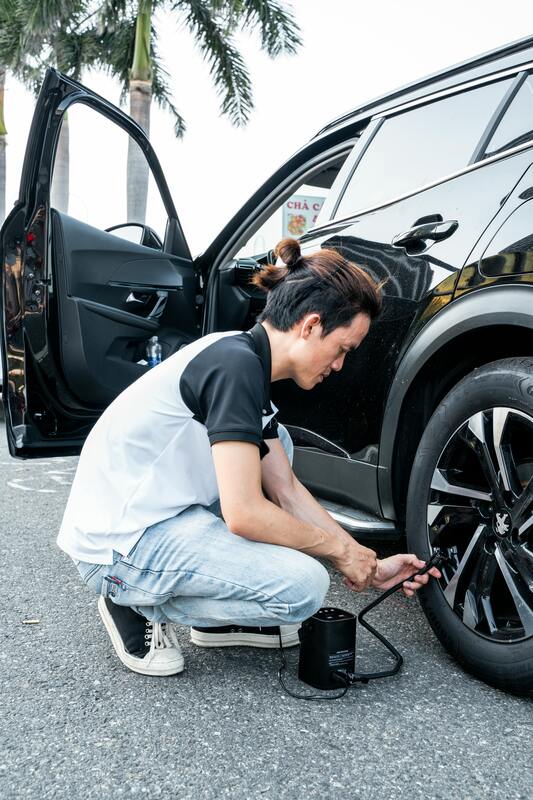


Okay, here's the rewritten text, making it sound more like a person wrote it:
🔧 1. What's a Tire Air Pump?
A tire air pump is just what you use to pump air into your tires until they're at the right pressure. You need one to drive safely, not waste gas, and keep your tires from wearing out too fast.
🧰 2. Types of Tire Air Pumps
A. Manual Pumps
Floor Pumps: You work these with your hand or foot. They're simple and easy to carry.
Foot Pumps: You step on a pedal over and over to pump air.
Hand Pumps: These are mostly for bikes, not cars.
✅ Nice for bikes, emergencies, or small jobs
❌ Too much work for car tires
B. Electric Pumps
1. DC 12V (Car-powered) Pumps
These plug into your car's cigarette lighter (the 12V thing).
Small and people usually keep them in their cars.
2. AC-powered Pumps
You plug these into a wall at home.
They're stronger and good for your garage.
3. Battery-powered Pumps
They have batteries you can recharge.
No wires and easy to move around.
✅ Great for cars, motorcycles, bikes
❌ Can overheat if you run them too long
C. Air Compressors
These are bigger and more powerful.
Shops use them, or if you're doing serious work.
They fill tires fast and can power air tools.
✅ Fill tires really fast
❌ Cost a lot, take up space, and are loud
⚙️ 3. What's Inside
Motor: This powers the pump in electric models.
Pressure Gauge: This shows you the tire pressure (either with a needle or a digital number).
Air Hose: This goes from the pump to the tire.
Valve Connector: This fits onto the tire valve (either the normal kind or the kind on bikes).
Power Plug: This is how it gets power (either a car plug, wall plug, battery, or your foot!).
Cooling Thing: This keeps electric pumps from getting too hot.
🔍 4. How It Works (Easy Version)
It sucks in air from around you.
The motor squeezes the air using something like a piston.
The squeezed air goes through the hose into the tire.
The gauge tells you the pressure in the tire.
You stop it when it gets to the pressure you want.
✅ 5. How to Use It (Quick Steps)
Find the right PSI for your tires (it's on the tire or in your car's book).
Take off the cap on the tire valve.
Put the pump's connector on the tire valve.
Turn the pump on.
Electric: connect it to power and flip the switch.
Manual: Start pumping with your foot or hand.
Watch the pressure gauge.
Stop when it hits the right PSI.
Take off the connector and put the cap back on.
📏 6. Tire Pressure Numbers
PSI (Pounds per Square Inch) – This is what people use for car tires.
Bar – This is a metric thing (1 bar is about 14.5 PSI).
kPa (Kilopascal) – Some people use this.
🧠 7. Stuff to Look For
Shuts off by itself when it hits the right pressure
Digital screen
Light to see at night
Different tips for balls, toys, etc.
Can let air out, too (not always needed)
A case to keep it in, or a neat way to wrap the cord
How long it can run without overheating
🛠️ 8. Keeping It Working
Keep the hose and cord straight.
Clean the dust out of the holes and fan.
Don't run it too hard – pay attention to how long it can run safely.
Keep it in a cool, dry spot.
Charge battery models every so often.
Only use the right kind of power.
⚠️ 9. Staying Safe
Never put more air in than the tire can handle.
Don't run electric pumps forever – let them cool down.
Check tire pressure when the tires are cold (like in the morning).
Keep your hands away from moving parts.
Turn it off and unplug it when you're done.
🛞 10. What Else Can You Do With It?
Pump up:
Bike tires
Motorcycle tires
Balls
Pool toys
Air mattresses
Big compressors can power air tools (in shops).
🧪 11. Problems and Fixes
Problem Why It Happens What to Do
Pump won’t start No power Check the plug or battery
Slow pumping Air leaking Fix or tighten things
Overheating Running it too long Turn it off and let it cool
Wrong pressure Bad gauge Use another gauge
Won't fit the valve Wrong tip or broken Use a different tip, or get a new one
🧮 12. Manual vs Electric – Quick Look
Thing Manual Pump Electric Pump
Easy to carry Very Okay
How hard to use Hard Easy
How fast Slow Fast
Keeping it working Easy A little harder
Power Your muscles Battery, car plug, or wall plug
How accurate Not always perfect Usually good
📦 13. What to Keep in Your Car
Small car air pump or battery pump
Tire gauge
Extra valve caps
Tire patch or sealant (maybe)
Flashlight (if the pump doesn't have one)
📚 14. Fun Fact
Sometimes people use nitrogen in tires instead of normal air. You can still use a regular air pump if you need to add air – you don't *have* to use nitrogen.
🔧 1. What's a Tire Air Pump?
A tire air pump is just what you use to pump air into your tires until they're at the right pressure. You need one to drive safely, not waste gas, and keep your tires from wearing out too fast.
🧰 2. Types of Tire Air Pumps
A. Manual Pumps
Floor Pumps: You work these with your hand or foot. They're simple and easy to carry.
Foot Pumps: You step on a pedal over and over to pump air.
Hand Pumps: These are mostly for bikes, not cars.
✅ Nice for bikes, emergencies, or small jobs
❌ Too much work for car tires
B. Electric Pumps
1. DC 12V (Car-powered) Pumps
These plug into your car's cigarette lighter (the 12V thing).
Small and people usually keep them in their cars.
2. AC-powered Pumps
You plug these into a wall at home.
They're stronger and good for your garage.
3. Battery-powered Pumps
They have batteries you can recharge.
No wires and easy to move around.
✅ Great for cars, motorcycles, bikes
❌ Can overheat if you run them too long
C. Air Compressors
These are bigger and more powerful.
Shops use them, or if you're doing serious work.
They fill tires fast and can power air tools.
✅ Fill tires really fast
❌ Cost a lot, take up space, and are loud
⚙️ 3. What's Inside
Motor: This powers the pump in electric models.
Pressure Gauge: This shows you the tire pressure (either with a needle or a digital number).
Air Hose: This goes from the pump to the tire.
Valve Connector: This fits onto the tire valve (either the normal kind or the kind on bikes).
Power Plug: This is how it gets power (either a car plug, wall plug, battery, or your foot!).
Cooling Thing: This keeps electric pumps from getting too hot.
🔍 4. How It Works (Easy Version)
It sucks in air from around you.
The motor squeezes the air using something like a piston.
The squeezed air goes through the hose into the tire.
The gauge tells you the pressure in the tire.
You stop it when it gets to the pressure you want.
✅ 5. How to Use It (Quick Steps)
Find the right PSI for your tires (it's on the tire or in your car's book).
Take off the cap on the tire valve.
Put the pump's connector on the tire valve.
Turn the pump on.
Electric: connect it to power and flip the switch.
Manual: Start pumping with your foot or hand.
Watch the pressure gauge.
Stop when it hits the right PSI.
Take off the connector and put the cap back on.
📏 6. Tire Pressure Numbers
PSI (Pounds per Square Inch) – This is what people use for car tires.
Bar – This is a metric thing (1 bar is about 14.5 PSI).
kPa (Kilopascal) – Some people use this.
🧠 7. Stuff to Look For
Shuts off by itself when it hits the right pressure
Digital screen
Light to see at night
Different tips for balls, toys, etc.
Can let air out, too (not always needed)
A case to keep it in, or a neat way to wrap the cord
How long it can run without overheating
🛠️ 8. Keeping It Working
Keep the hose and cord straight.
Clean the dust out of the holes and fan.
Don't run it too hard – pay attention to how long it can run safely.
Keep it in a cool, dry spot.
Charge battery models every so often.
Only use the right kind of power.
⚠️ 9. Staying Safe
Never put more air in than the tire can handle.
Don't run electric pumps forever – let them cool down.
Check tire pressure when the tires are cold (like in the morning).
Keep your hands away from moving parts.
Turn it off and unplug it when you're done.
🛞 10. What Else Can You Do With It?
Pump up:
Bike tires
Motorcycle tires
Balls
Pool toys
Air mattresses
Big compressors can power air tools (in shops).
🧪 11. Problems and Fixes
Problem Why It Happens What to Do
Pump won’t start No power Check the plug or battery
Slow pumping Air leaking Fix or tighten things
Overheating Running it too long Turn it off and let it cool
Wrong pressure Bad gauge Use another gauge
Won't fit the valve Wrong tip or broken Use a different tip, or get a new one
🧮 12. Manual vs Electric – Quick Look
Thing Manual Pump Electric Pump
Easy to carry Very Okay
How hard to use Hard Easy
How fast Slow Fast
Keeping it working Easy A little harder
Power Your muscles Battery, car plug, or wall plug
How accurate Not always perfect Usually good
📦 13. What to Keep in Your Car
Small car air pump or battery pump
Tire gauge
Extra valve caps
Tire patch or sealant (maybe)
Flashlight (if the pump doesn't have one)
📚 14. Fun Fact
Sometimes people use nitrogen in tires instead of normal air. You can still use a regular air pump if you need to add air – you don't *have* to use nitrogen.
Okay, here's a rewrite of the text to sound more like a person wrote it:
**🔬 15. How Air Compression Actually Works**
Tire pumps use air compression to get the job done. They force outside air into a smaller space, which makes the pressure go up.
**How They Work:**
* **Piston Pumps:** These have a piston inside that moves back and forth to suck in air and then squash it.
* **Diaphragm Pumps:** These use a bendy disc to compress the air. You see these in smaller, quieter pumps.
* **Rotary Pumps:** These use spinning parts to compress air. They're mostly for big, industrial jobs and not really used for tires.
**What Happens When You Pump:**
1. **Air In:** The pump sucks air into its chamber.
2. **Squish:** The piston or disc squeezes the air.
3. **Air Out:** The compressed air gets pushed out through the hose.
How well these pumps work depends on how hot or cold it is outside, how high up you are, and what kind of pump it is.
**🏁 16. Why Your Tire Pressure Matters**
Keeping your tires properly inflated is super important. Here’s why:
**What Happens If...**
* **Tires are low:** You'll waste gas, your tires will wear out faster, and they could overheat.
* **Tires are too full:** You won't have as much grip on the road, the ride will be bumpy, and you risk a blowout.
* **Tires are just right:** You'll be safer, save gas, and your car will handle better.
Even a tiny bit of difference in pressure can change how much gas you use or how long it takes to stop.
**🔄 17. Duty Cycle: What's That All About?**
This tells you how long a pump can run before it needs a break to cool down. It's usually shown as a percentage for a 10-minute period.
* **100%:** This can runs forever, no breaks needed!
* **50%:** Run it for 5 minutes, then let it rest for 5 minutes.
* **25%:** Run it for 2.5 minutes, then let it rest for 7.5 minutes.
Most portable pumps are around 25–50%. The big, tough pumps can run at 100%.
**🏍️ 18. What Pump Should You Use?**
**A. Cars & SUVs:**
* Usually need 30–35 PSI.
* A small, portable 12V pump that plugs into your car is usually best.
**B. Motorcycles:**
* Need 25–42 PSI, depending on the tire.
* A small pump is fine, but make sure the gauge is accurate.
**C. Bicycles:**
* Use Presta or Schrader valves.
* Hand pumps or floor pumps are the way to go.
**D. Trucks & Buses:**
* Need 80+ PSI.
* Gotta get a strong compressor that can handle high pressure.
**E. Off-Road Vehicles (4x4s, Jeeps):**
* Often let air out of the tires for better grip off-road.
* You'll need a beefy pump to fill them back up before you hit the road.
**🛠️ 19. Making Your Pump Even Better**
You can soup up your air pump with:
* **Longer hoses:** Good for reaching all your tires.
* **A better gauge:** If your pump's gauge isn't very good.
* **A tire deflator:** Great for off-roaders.
* **Quick connectors:** To swap hoses faster.
* **Heat protection:** To keep your hoses from melting after you've been pumping for a while.
**🌍 20. What About the Environment and Power?**
**Power Stuff:**
* **Solar panels:** To charge battery-powered pumps with a USB-C.
* **Power banks:** For tiny USB pumps.
* **Inverters:** So you can plug AC pumps into your car.
**Think Green:**
* Gas-powered compressors make carbon monoxide if you use them inside!
* Battery-powered pumps are better for the planet.
**📐 21. Getting the Right Pressure**
To get an accurate reading:
* Use a separate tire pressure gauge.
* Check the pressure when the tires are cold (not right after driving).
* Don't check right after filling up—the air is hot and the reading will be off.
* To be super precise, fill the tire a little too much, then let some air out to get to the right PSI.
**⚖️ 22. The Legal Stuff**
* Driving on under-inflated tires might void your insurance if you crash.
* Some places require TPMS (Tire Pressure Monitoring System).
* Truckers might have to check their tires every day, so pumps are a must-have.
**📈 23. Cool New Pump Tech**
* **Smart pumps:** They figure out the right pressure all by themselves.
* **Bluetooth:** They connect to your phone and keep track of your tire pressure.
* **Warnings:** They yell at you if your tires are too full or too flat.
* **Tiny pumps:** Super small pumps with fancy motors are coming out.
**💡 24. How to Pick the Perfect Pump**
Before you buy a tire pump, think about:
| Feature | How Much Does It Matter? | Notes |
| :------------- | :----------------------- | :------------------------------------------------------------------- |
| Max PSI | Very Important | Has to be higher than what your tires need. |
| Power | Very Important | Make sure it works with your car or where you'll be using it. |
| Speed | Kinda Important | How fast it fills tires (shown as L/min or time/PSI). |
| Noise | Kinda Important | Check the decibel rating (dB) if noise bothers you. |
| Portability | Very Important | How easy is it to carry around? |
| Auto Shut-Off | Very Important | So you don't overfill your tires. |
| Quality | Kinda Important | Especially if you use it a lot. |
**🧳 25. Emergency Time**
Always have:
* A pump
* Tire sealant or a patch kit
* Warning triangles or a vest
* A jump starter (if your pump drains the car battery)
A flat tire on a back road is no big deal if you have a pump and a patch kit.
**🔄 26. Other Ways to Inflate**
* **CO2 Inflators:** Used for bikes. One-time use gas cartridges.
* **Air Cans:** Cans of pre-filled air. They cost more and you can't reuse them.
* **Gas Stations:** Good, but not always open or nearby.
**🧾 27. TPMS vs. Checking Yourself**
* TPMS tells you when your tires are low with a light on your dashboard.
* But it doesn't fill them up or give you an exact pressure reading.
* Always double-check with a pump or gauge.
**🚀 28. Pro Inflation Tips**
* Fill your tires in the morning when they're cold.
* Don't just trust the pump's gauge. Check it every month.
* Add a little extra air if you're hauling heavy stuff.
* Check all 4 tires (plus the spare!) every month.
**🔬 15. How Air Compression Actually Works**
Tire pumps use air compression to get the job done. They force outside air into a smaller space, which makes the pressure go up.
**How They Work:**
* **Piston Pumps:** These have a piston inside that moves back and forth to suck in air and then squash it.
* **Diaphragm Pumps:** These use a bendy disc to compress the air. You see these in smaller, quieter pumps.
* **Rotary Pumps:** These use spinning parts to compress air. They're mostly for big, industrial jobs and not really used for tires.
**What Happens When You Pump:**
1. **Air In:** The pump sucks air into its chamber.
2. **Squish:** The piston or disc squeezes the air.
3. **Air Out:** The compressed air gets pushed out through the hose.
How well these pumps work depends on how hot or cold it is outside, how high up you are, and what kind of pump it is.
**🏁 16. Why Your Tire Pressure Matters**
Keeping your tires properly inflated is super important. Here’s why:
**What Happens If...**
* **Tires are low:** You'll waste gas, your tires will wear out faster, and they could overheat.
* **Tires are too full:** You won't have as much grip on the road, the ride will be bumpy, and you risk a blowout.
* **Tires are just right:** You'll be safer, save gas, and your car will handle better.
Even a tiny bit of difference in pressure can change how much gas you use or how long it takes to stop.
**🔄 17. Duty Cycle: What's That All About?**
This tells you how long a pump can run before it needs a break to cool down. It's usually shown as a percentage for a 10-minute period.
* **100%:** This can runs forever, no breaks needed!
* **50%:** Run it for 5 minutes, then let it rest for 5 minutes.
* **25%:** Run it for 2.5 minutes, then let it rest for 7.5 minutes.
Most portable pumps are around 25–50%. The big, tough pumps can run at 100%.
**🏍️ 18. What Pump Should You Use?**
**A. Cars & SUVs:**
* Usually need 30–35 PSI.
* A small, portable 12V pump that plugs into your car is usually best.
**B. Motorcycles:**
* Need 25–42 PSI, depending on the tire.
* A small pump is fine, but make sure the gauge is accurate.
**C. Bicycles:**
* Use Presta or Schrader valves.
* Hand pumps or floor pumps are the way to go.
**D. Trucks & Buses:**
* Need 80+ PSI.
* Gotta get a strong compressor that can handle high pressure.
**E. Off-Road Vehicles (4x4s, Jeeps):**
* Often let air out of the tires for better grip off-road.
* You'll need a beefy pump to fill them back up before you hit the road.
**🛠️ 19. Making Your Pump Even Better**
You can soup up your air pump with:
* **Longer hoses:** Good for reaching all your tires.
* **A better gauge:** If your pump's gauge isn't very good.
* **A tire deflator:** Great for off-roaders.
* **Quick connectors:** To swap hoses faster.
* **Heat protection:** To keep your hoses from melting after you've been pumping for a while.
**🌍 20. What About the Environment and Power?**
**Power Stuff:**
* **Solar panels:** To charge battery-powered pumps with a USB-C.
* **Power banks:** For tiny USB pumps.
* **Inverters:** So you can plug AC pumps into your car.
**Think Green:**
* Gas-powered compressors make carbon monoxide if you use them inside!
* Battery-powered pumps are better for the planet.
**📐 21. Getting the Right Pressure**
To get an accurate reading:
* Use a separate tire pressure gauge.
* Check the pressure when the tires are cold (not right after driving).
* Don't check right after filling up—the air is hot and the reading will be off.
* To be super precise, fill the tire a little too much, then let some air out to get to the right PSI.
**⚖️ 22. The Legal Stuff**
* Driving on under-inflated tires might void your insurance if you crash.
* Some places require TPMS (Tire Pressure Monitoring System).
* Truckers might have to check their tires every day, so pumps are a must-have.
**📈 23. Cool New Pump Tech**
* **Smart pumps:** They figure out the right pressure all by themselves.
* **Bluetooth:** They connect to your phone and keep track of your tire pressure.
* **Warnings:** They yell at you if your tires are too full or too flat.
* **Tiny pumps:** Super small pumps with fancy motors are coming out.
**💡 24. How to Pick the Perfect Pump**
Before you buy a tire pump, think about:
| Feature | How Much Does It Matter? | Notes |
| :------------- | :----------------------- | :------------------------------------------------------------------- |
| Max PSI | Very Important | Has to be higher than what your tires need. |
| Power | Very Important | Make sure it works with your car or where you'll be using it. |
| Speed | Kinda Important | How fast it fills tires (shown as L/min or time/PSI). |
| Noise | Kinda Important | Check the decibel rating (dB) if noise bothers you. |
| Portability | Very Important | How easy is it to carry around? |
| Auto Shut-Off | Very Important | So you don't overfill your tires. |
| Quality | Kinda Important | Especially if you use it a lot. |
**🧳 25. Emergency Time**
Always have:
* A pump
* Tire sealant or a patch kit
* Warning triangles or a vest
* A jump starter (if your pump drains the car battery)
A flat tire on a back road is no big deal if you have a pump and a patch kit.
**🔄 26. Other Ways to Inflate**
* **CO2 Inflators:** Used for bikes. One-time use gas cartridges.
* **Air Cans:** Cans of pre-filled air. They cost more and you can't reuse them.
* **Gas Stations:** Good, but not always open or nearby.
**🧾 27. TPMS vs. Checking Yourself**
* TPMS tells you when your tires are low with a light on your dashboard.
* But it doesn't fill them up or give you an exact pressure reading.
* Always double-check with a pump or gauge.
**🚀 28. Pro Inflation Tips**
* Fill your tires in the morning when they're cold.
* Don't just trust the pump's gauge. Check it every month.
* Add a little extra air if you're hauling heavy stuff.
* Check all 4 tires (plus the spare!) every month.